The remote is beautifully built and the screen looks fantastic, but it’s missing the IR and Bluetooth support — which unfortunately makes it unusable for my setup. Your website mentions that these features are supported, so I’m wondering if this is something that will be added in a future update. When you have access to IR and BT you want to make mappings to hard buttons and aslo screen. Like feedback for volume level and so on.
With fully working IR and Bluetooth, this could easily become one of the best remotes on the market. Remote 3 already offers this functionality along with Home Assistant integration, and the new Sofabaton X2 also supports both IR and BT. I really hope to see these features implemented.
I have devices like this: IP-based: Magnetar BluRay, Zidoo media player, JVC projector, StormAudio ISP BT-based: Zidoo media player, PS5 IR-based: JVC Projector, Magnetar BluRay,
Hi, I am a product manager at Sanytron. Thank you for your detailed feedback and your interest in the future development of our products. We highly value your input regarding the need for infrared (IR) and Bluetooth (BT) support, and we fully understand how important these features are for integrating with your current setup.
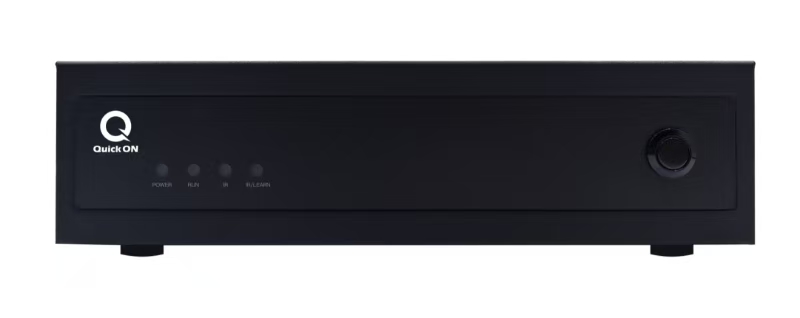
First, regarding the positioning of our current HA100 remote: at this stage, it is primarily designed as a human-machine interface terminal, with control logic and integrated functionalities mainly driven by the Home Assistant ecosystem. We aim to provide users with a flexible and highly customizable interface control experience through this approach. At the same time, we recognize the limitations of Home Assistant in professional audiovisual (AV) control. Therefore, we have begun developing a dedicated AV controller—the AVBox—which will seamlessly integrate into the Home Assistant ecosystem and support direct connection with the remote to meet more complex AV device control needs.
Additionally, we are planning for the longer-term product roadmap: in 2026, we will launch Sanytron’s all-in-one control remote. This product will not only retain the advantages of the current human-machine interface but will also feature a more powerful processor and larger memory to support locally integrated control functions and a smoother interactive experience, truly achieving an “All-in-One” control terminal.
We will continue to share development progress and upgrade plans through our official website and community. We also welcome you to stay updated on our latest news.
I agree that the lack of IR and BT functionality that is hardware based is a bummer. Have you thought about open sourcing the development effort. I think that the large and active HA community might be able to speed up access to some of these features. Frankly, with how rough and ready the setup process is I think this is really still a product for sophisticated enthusiasts who could probably hack our way through. Either way, I’m liking the product thus far – Sonos + Spotify is very slick.
I think you should reconsider the product listing as it specifically says the following:
“Broad Connectivity
Astrion powers a universal control experience with multi-protocol support:
Wi-Fi — Native HA connection and cloud access
Bluetooth — Local device pairing
Infrared (IR) — Supports TVs, AV equipment, and legacy devices”
This is false advertising - the functionality does not exist. Furthermore if I understand correctly theres no plan to implement it. The product listing as it stands is misleading at best or just straight dishonest/fraudulent at worse.
I am a development engineer at Sanytron,thank you for your honest feedback, and I sincerely apologise that the product listing has led you to feel misled. That was never our intention.
Let me address your concerns directly:
The hardware fully supports IR transmission – that is already a fact.
IR functionality is actively under development – we have a clear plan and are making solid progress.
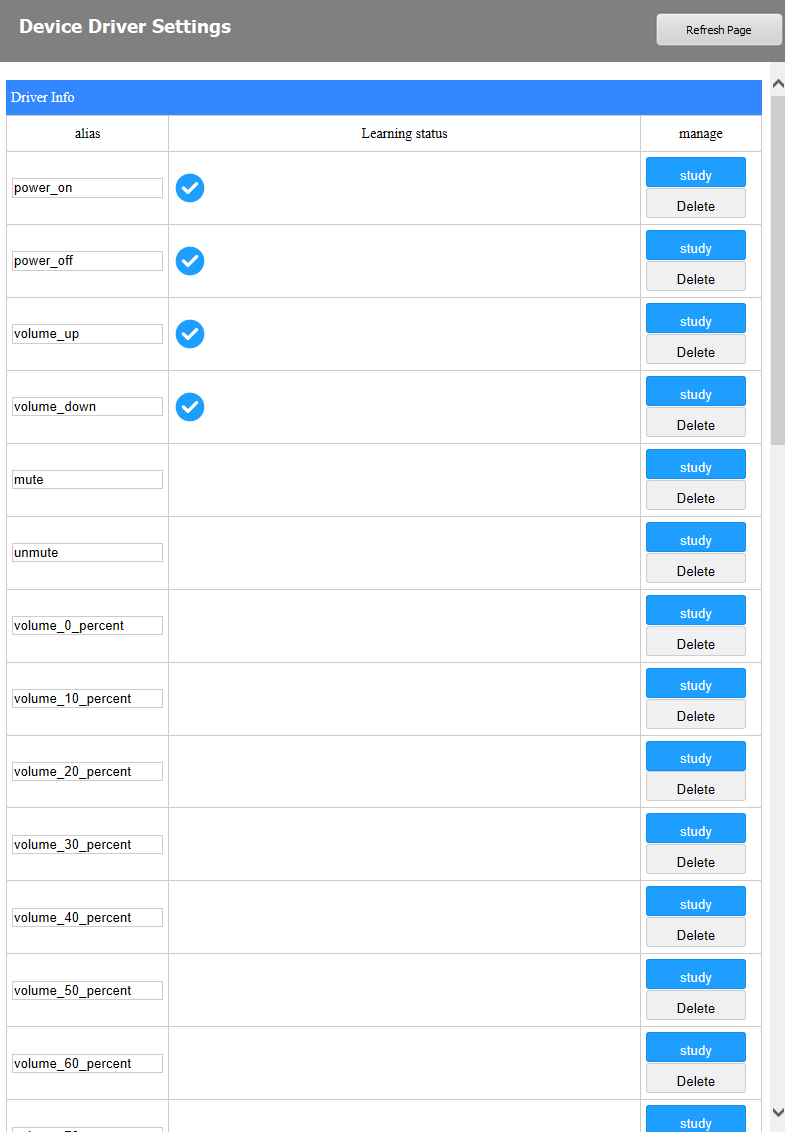
Specifically, we are currently testing Home Assistant (HA) integration. Once completed, local remote control will be possible using SmartIR and Flipper tool codes. This feature will be released in our next major firmware/software version, and we expect it to be fully available within 1–2 months.
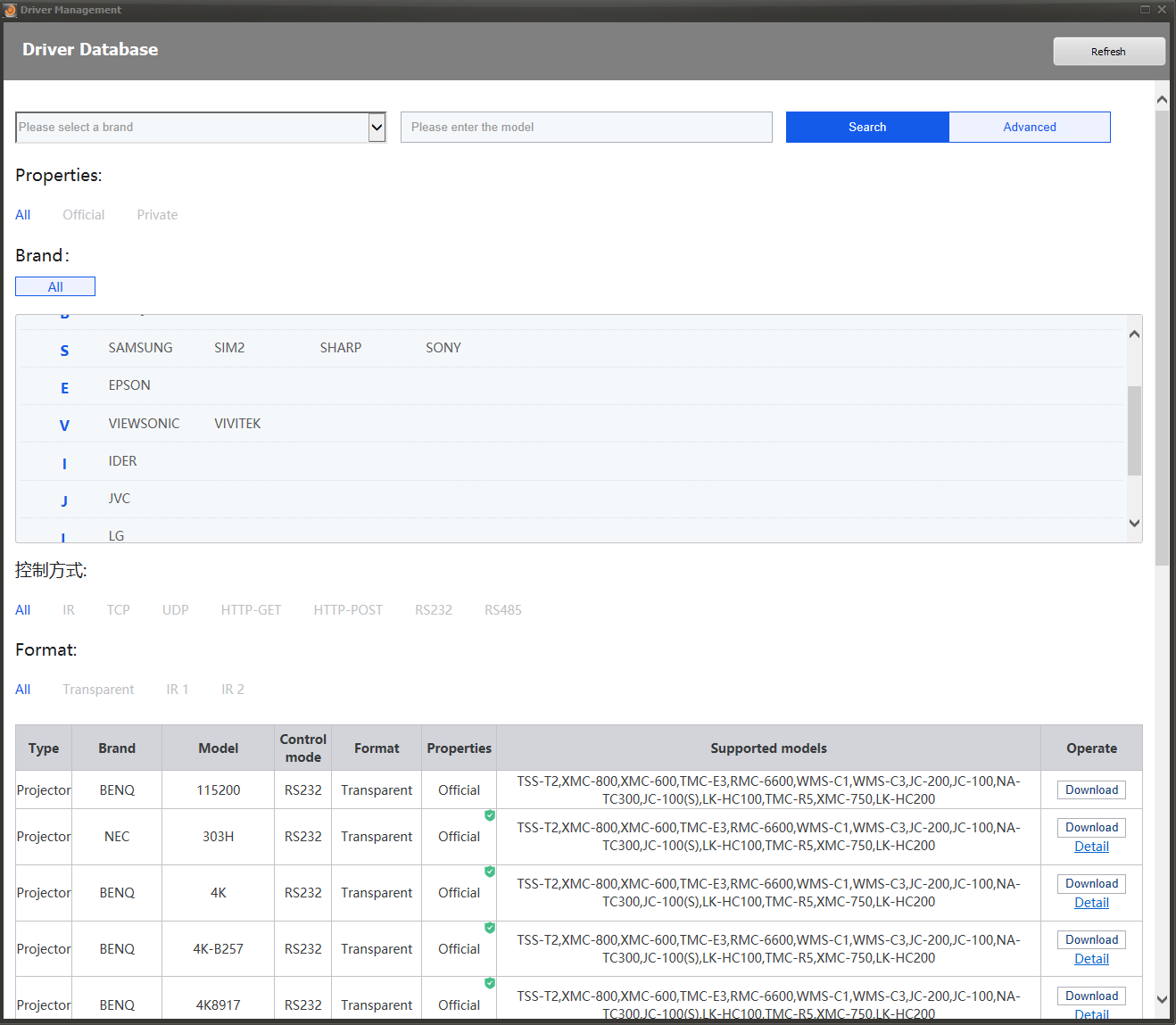
We are also in discussions with code library partners to deliver a more comprehensive and reliable IR code database in the future.
The product listing describes the intended final feature set, but I agree that without a clear timeline, it could be seen as misleading. We will review and update the listing to better reflect the current status.
To be absolutely clear: there is a concrete plan to implement IR, and we are committed to delivering it. We are not abandoning this feature.
Thank you for holding us accountable. Please feel free to reach out anytime for progress updates.
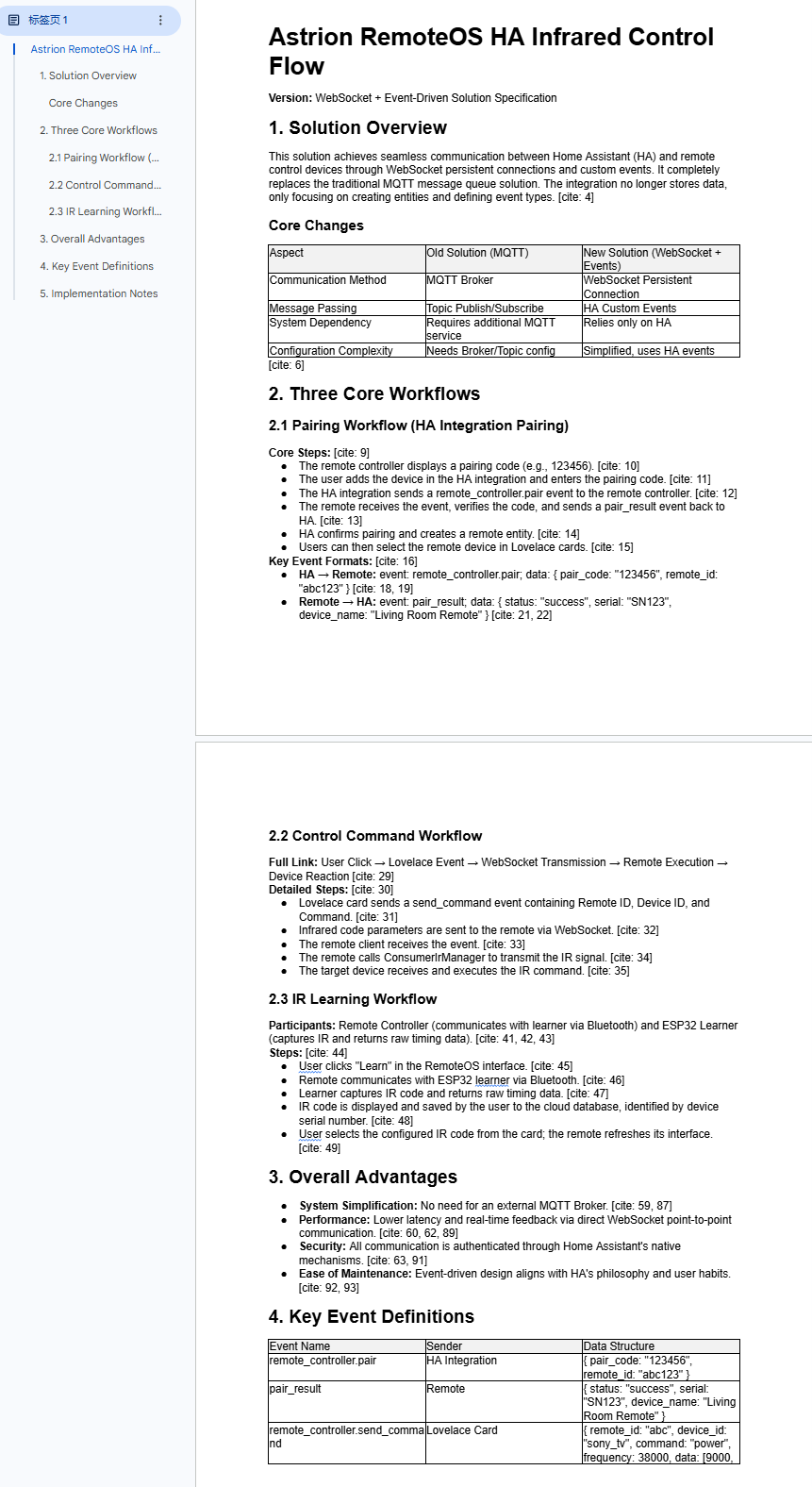
______ Astrion RemoteOS HA Infrared Control Flow
The remote does also have Bluetooth hardware on the SOC, but android Bluetooth without some very deep root hacks is fairly limited in what it can be used for. so it probably cant emulate a multitude of devices. Perhaps there’s a second Bluetooth radio in there on a secondary chip like an ESP32 that could be used at a lower level?
On Android 9 and newer it is fairly straight forward to implement a Bluetooth keyboard emulation and other standard HID devices, but I dont think that is supported on Android 8, Sanytron would have to implement their own system which sounds much more complex.
I have sent and received files from the remote via bluetooth to prove it absolutely is working and the drivers are functional.
As for IR, it’s pretty restricting only having emitters on the handset itself, anything not within range of that would have to rely on external hardware. I’m using cheap Broadlink emitters controlled via HA and NodeRed to send IR commands from the remote at the moment for example.
Seems the intent is to implement it as an addressable IR emitter within HA?, so you could choose to use the handset or an external emitter on a per-device basis. hopefully that works when the remote is in standby so we can just treat it as any other emitter and send IR codes to it freely and not just from button/screen operations (press button on zigbee wall controller, HA sends power on command to remote IR emitter, for example).
That looks like it would be a quite powerful central control solution, as long it is can maintain control via HomeAssistant, whether by an official integration, or a published standard API (REST, MQTT, Etc).. or both.
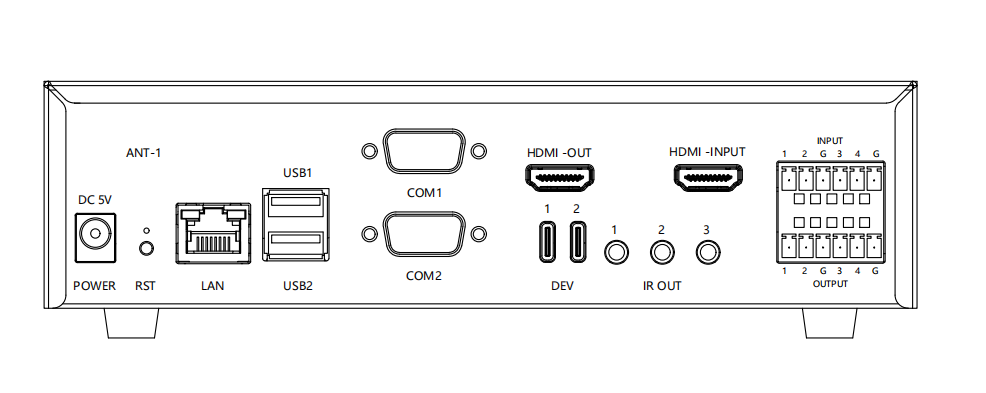
I see the hardware has HDMI I/O, can you say what that is intended to do? would it be for HDMI signal info/EDID reporting/emulation, CEC command send/receive (most of us disable CEC entirely and rely on external control since it is poorly implemented in most consumer products), or is it more complex, such as rendering overlays etc (requires significant engineering, proper licencing and HDCP). if you cant talk in detail about un-announced hardware that is perfectly fine too.
Thank you for your incredibly insightful feedback. You’ve hit on some of the exact technical challenges we navigated during the development of the Astrion HA100.
1. Bluetooth & HID Emulation
You are spot on regarding the limitations of Android 8. While the Bluetooth drivers are fully functional (as you noted with file transfers), implementing native HID emulation for keyboard/mouse control on this specific OS version requires deep kernel-level modifications that often compromise system stability.
To address this, we have already developed a next-generation mainboard based on Android 11, which makes Bluetooth HID emulation much more straightforward. However, this hardware carries a significantly higher BOM (Bill of Materials) cost.
2. Product Positioning: Interface vs. Controller We want to be clear about the HA100’s “Core Identity.” We’ve positioned the HA100 primarily as a premium User Interface (UI) terminal for the Home Assistant ecosystem. Because the HA ecosystem is already so powerful, the HA100’s value lies in bringing that dashboard from your wall or phone into a dedicated, tactile handheld device.
As you mentioned, using Home Assistant to bridge to external hardware like Broadlink IR blasters via Node-RED is exactly the workflow we recommend for the HA100. This allows us to keep the HA100 price highly competitive ($145 USD) for the HA community.
3. The Future: Astrion HA200 & The Multimodal Hub
For users looking for an independent universal remote that doesn’t rely solely on an existing HA setup for legacy control, we are planning the Astrion HA200.
New Platform: Built on the Android 11 mainboard for seamless Bluetooth HID control.
Dedicated Hub: The HA200 will be paired with a specialized Multi-functional Hub featuring integrated IR forwarding, RS232 serial ports, and other pro-integrator expansion interfaces.
We believe this two-tier approach—the HA100 as the ultimate HA companion and the HA200 as a standalone powerhouse—is the best way to serve both the budget-conscious geek and the power integrator.
If you have any good suggestions, please let me know in a timely manner
Hi there! Thank you for the incredibly sharp question. You’ve hit on a major pain point—most of us in the Home Assistant community have “CEC PTSD” from devices turning on/off at the wrong times or volume controls being hijacked.
When designing the Astrion AV-Controller, we didn’t include the HDMI port to follow the “CEC status quo.” Instead, we treated it as a Precision Supplemental Interface to solve the “last mile” of automation where IR and Serial control fail. Here is why it’s there:
1. Solving the “Source Switching Deadlock”
Many smart TVs (notably Xiaomi and certain entry-level models) do not support direct “Discrete IR” commands for specific inputs, like jumping straight to HDMI 2.
Our Solution: Beyond standard CEC commands, our controller supports Physical HPD (Hot Plug Detect) Simulation. When you trigger a scene in HA, the controller can simulate a physical cable insertion. Many TVs that ignore CEC “Switch” commands will prioritize and automatically jump to a source that has just been “physically” activated.
2. State Feedback (The End of “Guesswork”)
IR is a “fire and forget” protocol with no feedback—you never truly know if the TV is ON or OFF.
Our Solution: The HDMI interface acts as a Real-time Status Sensor. By monitoring the electrical status of the HDMI link (HPD signal), the AV-Controller provides a definitive binary state to Home Assistant. This eliminates the “Toggle Flip” frustration where an automation accidentally turns a TV off when it was already on.
3. Surgical Control vs. Total Takeover
We agree that CEC implementation is often poor. That is why we provide Granular Control.
Our Approach: In the Astrion/HA configuration, you aren’t forced into a “Full CEC” mode. You can choose to use the HDMI port only for Power Sensing or only for the “Simulated Insertion” trigger, while keeping your audio or standby logic strictly within HA or RS232.
4. Part of the “Tri-Mode” Strategy
The AV-Controller is designed to work in tandem with the Astrion Remote’s philosophy: physical certainty combined with dynamic flexibility. By adding HDMI-based HPD/CEC to our IR and Bluetooth stack, we ensure that no matter how stubborn your display is, there is always a path to successful automation.
Summary: This port is the “last resort” tool in your kit. It’s there to provide the deterministic feedback and switching capabilities that IR simply can’t achieve.
We’d love to hear your thoughts once you get your hands on the hardware!
I think you just need to concentrate on making the TV ROS Card compatible with all HA Entities. Scripts currently work we cannot add switches, buttons, input_select, select or remote entities.
Just enabling full button customisation and compatibility of all HA entities on the TV ROS Card will get a lot of us users what we need.
This way whatever device the user has integrated with HA will be able to be controlled via the TV ROS Card.
If you get the control of HA entities right, this will form a solid foundation for the Astrion and your other remotes.
You should stop advertising the HA100 as having bluetooth support, while the radio is there and android can use it for file transfer, audio, keyboard (input), mouse (input), this does not offer any bluetooth control as a “bluetooth remote” like some other remote devices do.
That needs to be made very clear if the above information of it not being feasible without hardware revision is accurate.
I think there also needs to be some kind of HA integration for the remote itself (or the app the remote is running), rather than just the card based system. That would allow status feedback about battery level, charging status, current page/card etc. and two way control to (for example) tell the remote to open a certain card so that the remote can stay in sync with scene/activity control from other devices or automations in HA.
Thank you for your candid and professional feedback. Regarding Bluetooth support, you are absolutely right—we must prioritize transparency to avoid misleading our users. While the hardware includes a Bluetooth radio, it is currently utilized for system-level tasks and basic peripherals, rather than acting as a ‘Bluetooth Remote’ to control third-party endpoints. We will update our documentation to clarify this limitation immediately.
Furthermore, your suggestion for a native HA integration (to report battery levels, charging status, and active page sync) is spot on. We envision Astrion as an ‘active entity’ within your ecosystem, not just a static display. While the engineering team is currently focused on AV control and IR code library stability, building a dedicated HA integration is high on our roadmap and will follow closely behind
We will pay attention to the following three “synchronizations” in future development, as shown in the following examples:
State Sync:
If the user switches to “movie mode” on the phone, Astrion should automatically jump to the “media control card” through HA’s linkage action. This is the true ‘full scene interaction’.
Sensor as Entities:
Virtualize Astrion’s battery, brightness, and even acceleration sensor (Motion) as sensor entities in HA.
Scenario example: When the remote control battery level drops below 20%, the smart speaker at home automatically broadcasts “Please charge the remote control”.
Astrion control integration would be very powerful for automation, automate the screen brightness based on the current lighting of the room, wake the device when a movie ends and bring up the matching control card for that device, display a notification or push an image to the screen when the doorbell is rung etc.etc.
I could probably get this working with ADB already, but some of those functions could be done within the App running on the remote and wouldn’t require any extra OS or background process work.
“When I want to watch a movie at night, I simply switch my Astrion to the ‘Cinema Control’ view. The moment the view changes, the curtains automatically close and the projector screen begins to lower. I no longer need to hunt for a dedicated ‘Cinema Mode’ trigger button—the view itself is the trigger.”
Core Concept: View-triggered automation
Scenario 2: Proactive Interface Pop-up
“As soon as the motion sensor detects me entering the bedroom, Home Assistant sends a command to Astrion, which instantly pops up the ‘Curtain Control’ RosCard. I can adjust the lighting the second I pick up the device, without spending a single moment navigating through menus.”
Core Concept: Sensor-driven card jumping
Scenario 3: Health & Environment Reminder
“When the presence sensor in my study detects I’ve been sitting too long, it triggers a HA automation that wakes up the Astrion on my desk. It immediately displays the RosCard for the ventilation system, allowing me to boost the fresh air flow with a single touch without searching for the page.”